
The Best Text Analysis Software for Education
Published Feb 21, 2022 · Updated Feb 21, 2026
Answer first: which tool should universities pick?
The “best” text analysis software for education depends on your use case. Are you coding a handful of interviews, or reporting on hundreds (or thousands) of survey comments? For small, researcher-led qualitative projects, tools like NVivo, MAXQDA, and ATLAS.ti are often a good fit; for institution-wide survey comments (e.g., NSS/PTES/PRES/UKES and module evaluations) where you need all-comment coverage, benchmarking, and governance-ready outputs, explore Student Voice Analytics.
If you’re working with NSS open-text, our NSS open-text analysis methodology explains a practical workflow for turning comments into evidence.
If you’re shortlisting approaches for NSS open-text specifically, read the Best NSS comment analysis (2025) guide.
Below is a split list of desktop and cloud tools that can help you analyse free-text datasets, plus a simple “best for” takeaway for each. Depending on your field, you may also see these packages referred to as CAQDAS (Computer-Assisted Qualitative Data Analysis Software). For HE-specific terminology (all-comment coverage, taxonomy, sentiment index), see our student feedback analysis glossary.
Desktop Software
Desktop tools are usually best when you want hands-on coding and memoing, and your dataset is manageable without institution-wide benchmarking.
Atlas.ti
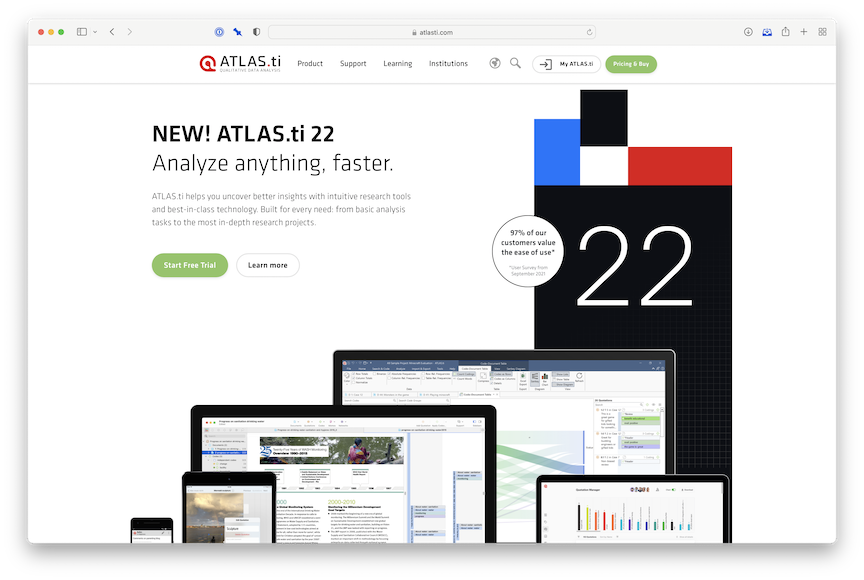 ATLAS.ti is designed to help you analyse unstructured data (text, multimedia, and geospatial). It lets you code data, evaluate its relative importance, and visualise relationships in your dataset.
Best for: hands-on qualitative coding across multiple data types, especially if you value relationship maps and visual exploration.
Version 22 introduced improvements such as:
- Analysis of social media comments.
- Auto-coding of relevant concepts.
- Organisation of codes into folders, categories, and sub-codes.
- New charts and tables to give an overview of your data.
- Other improvements and fixes.
Dedoose
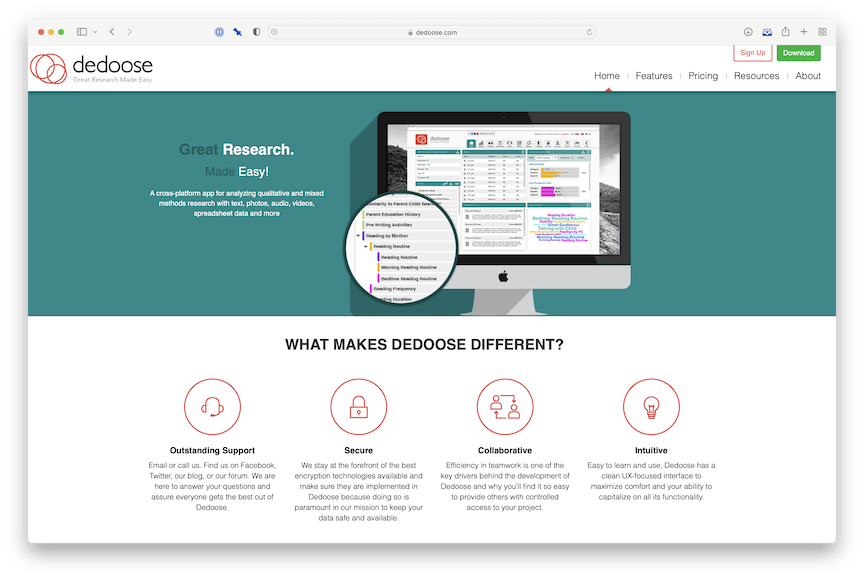 Dedoose is a qualitative data analysis tool aimed at rigorous mixed methods research. Although it has an academic heritage, it’s also used in medical research, market research, and social policy.
Best for: mixed methods projects where you want to connect qualitative themes to quantitative variables.
Version 9 includes:
- A user interface upgrade.
- New language options for the user interface.
- Bug fixes and performance enhancements.
f4analyse
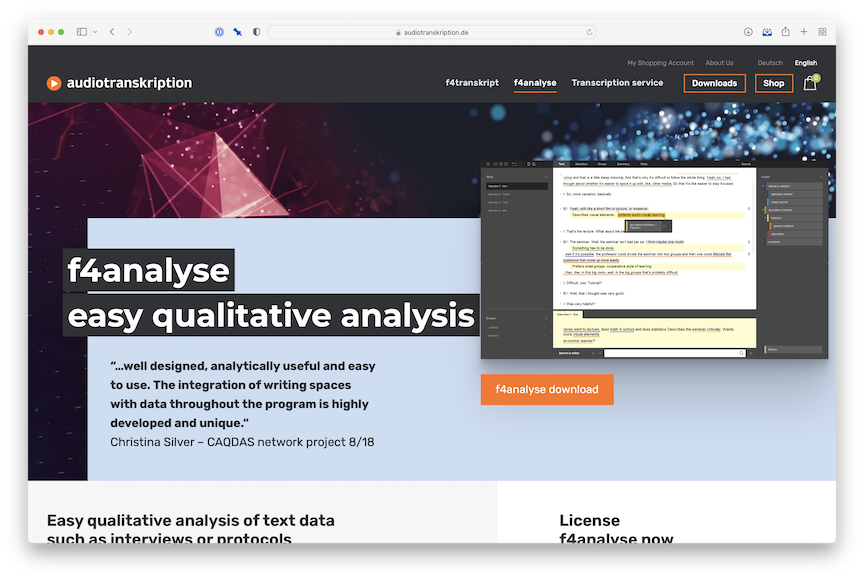 f4analyse is a low/no-code tool for qualitative analysis that supports methods that don’t rely on heavy coding. It also includes the ability to take notes and memos, and to share interpretations and summaries.
Best for: lightweight qualitative projects where you want a simple workflow for coding and memoing.
Version 3.4.1 includes:
- Text-based analysis.
- Memos and comments.
- A coding system.
- Collaboration features.
MAXQDA
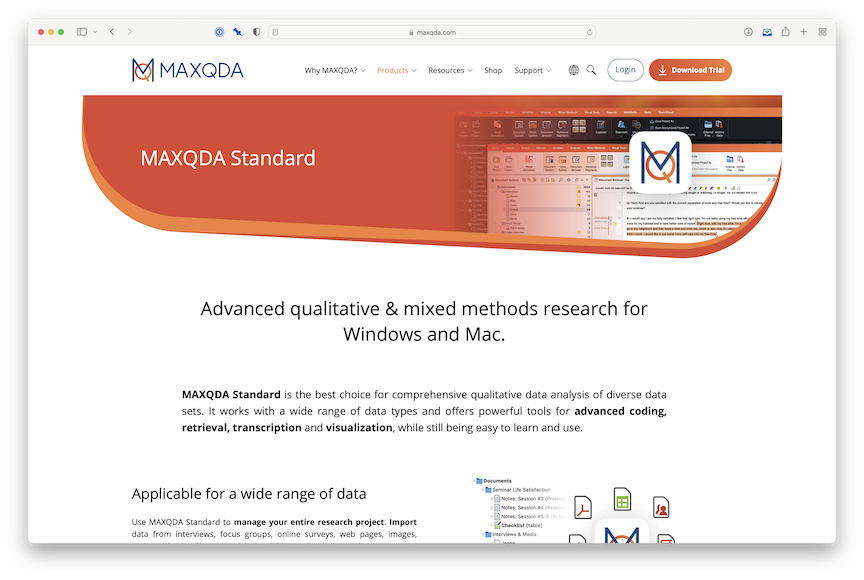 MAXQDA is designed for use in qualitative, quantitative, and mixed methods research. This research-focused tool is particularly well suited to processing interviews and combining qualitative and quantitative attributes.
Best for: mixed methods analysis when you want both qualitative workflows and quantitative variables in one place.
MAXQDA 2022 includes a suite of text analysis tools, including:
- A Profile Comparison Chart.
- Word Explorer.
- Import of text highlighting and comments from Word and PDF.
- Code and Document Summaries.
- Emoji support.
- Code name suggestions.
NVIVO
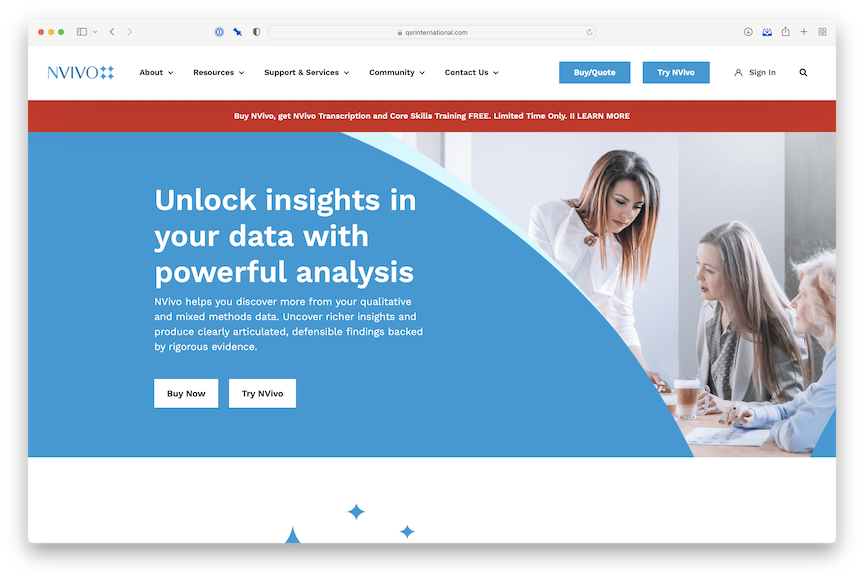 NVivo is one of the best-known desktop tools for text analysis in education. It’s designed to organise, analyse, and find insights in unstructured data such as interviews, open-ended survey responses, journal articles, social media, and web content.
It’s used in a wide range of fields beyond education, including the social sciences (anthropology, psychology, communication, sociology), as well as areas such as forensics, tourism, criminology, and marketing.
Best for: deep qualitative coding and querying when you need to organise lots of sources.
QDA miner
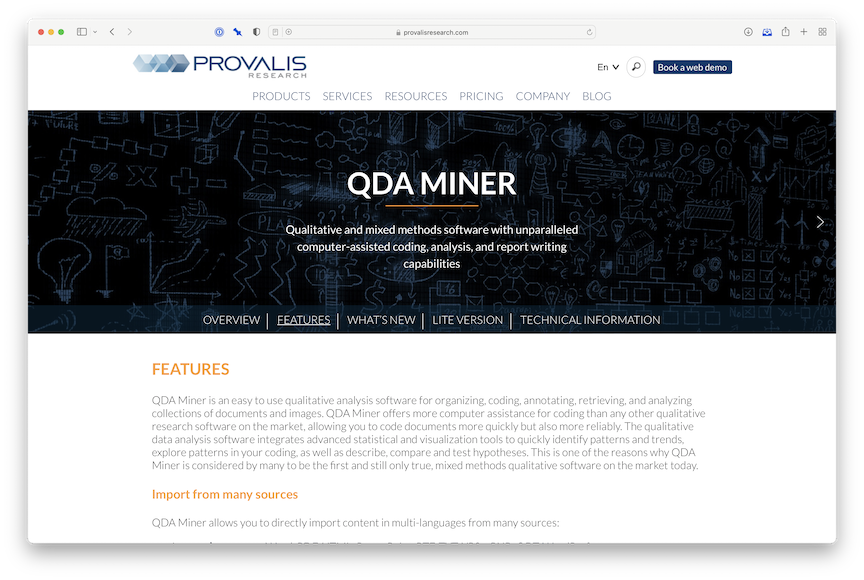 QDA Miner is another mixed methods qualitative data analysis package designed to help researchers manage, code, and analyse qualitative data.
The data typically used with this kind of software includes journal articles, scripts from TV or radio news, social media (such as Facebook, Twitter, or website reviews), interviews and focus group transcripts, and open-ended survey questions.
Best for: structured coding and content analysis, especially in mixed methods projects.
Quirkos
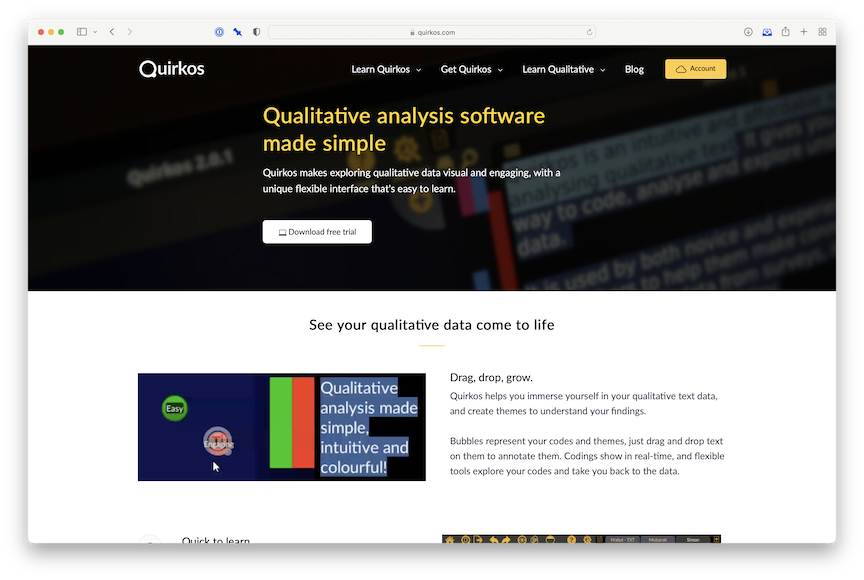 Quirkos is a CAQDAS (computer-assisted qualitative data analysis software) package for qualitative text analysis, commonly used in the social sciences. It provides an easy-to-use interface designed primarily for new and non-academic users of qualitative data.
Best for: beginners who want an approachable interface for qualitative coding.
SPSS
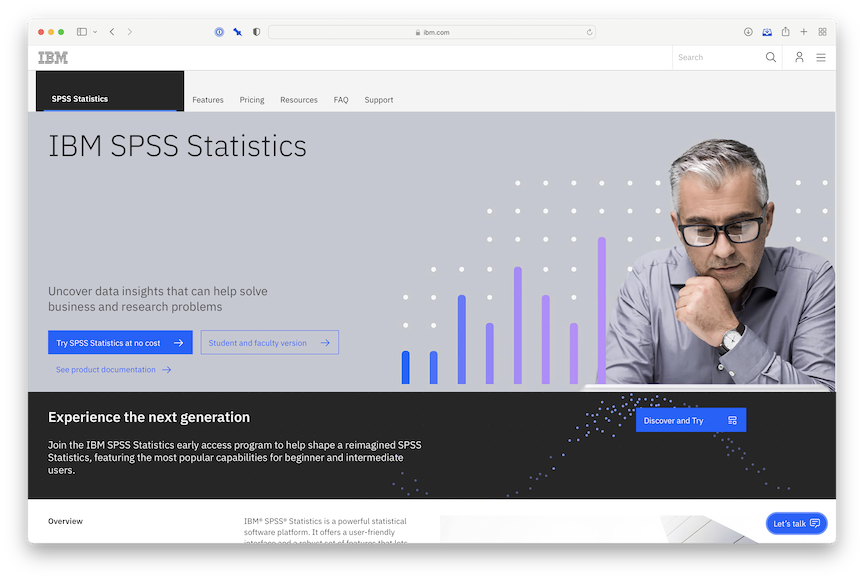 SPSS is a widely used program for statistical analysis in the social sciences. It’s also used by market researchers, health researchers, survey companies, government, education researchers, marketing organisations, data miners, and others. This is one of the classic tools in social science research, but it does come with a relatively steep learning curve.
Best for: statistical analysis once you’ve structured text data into variables (e.g., coded themes or sentiment scores).
Wordstat
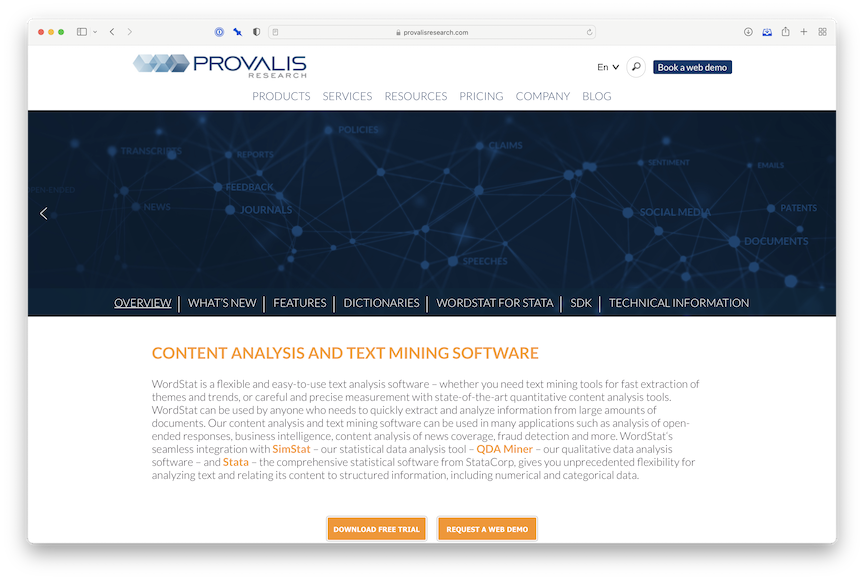 WordStat is a content analysis and text-mining tool. It’s mainly used for business intelligence and competitive analysis of websites, sentiment analysis, analysis of open-ended questions, and theme extraction from social media data.
If you’re applying sentiment analysis to student feedback, see our sentiment analysis guide for UK universities for interpretation and governance caveats.
Best for: dictionary-based analysis and automated text-mining workflows.
Transana
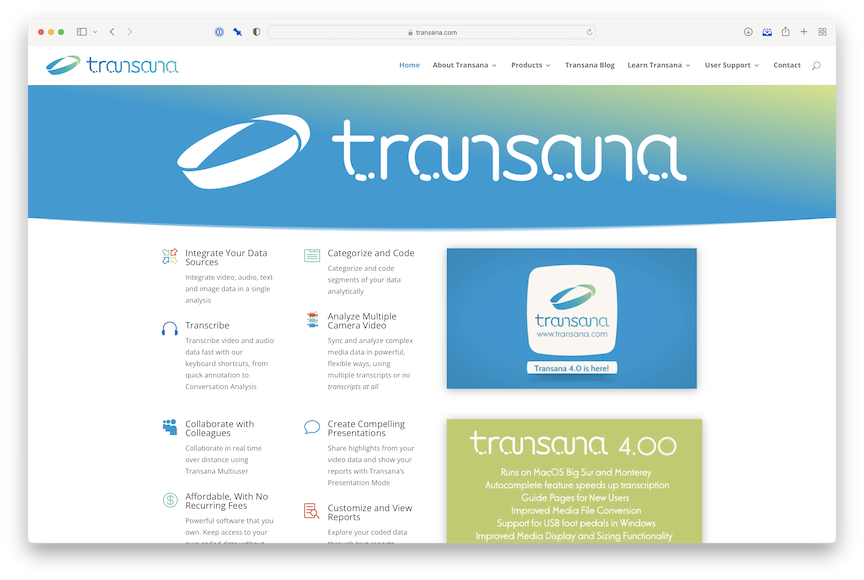 Transana is another general desktop tool that lets users work with video, audio, image, text, and survey data. It offers audio transcription tools, video analysis, and presentation and collaboration features.
Best for: analysing video or audio with transcripts linked back to the source media.
Cloud Based Software
Cloud tools can be useful when you need collaboration or automation. If you’re working with student comments, check governance (audit trails, versioning, exports) and data protection before you commit, and use our student comment analysis governance checklist to sanity-check your approach.
Labelbox
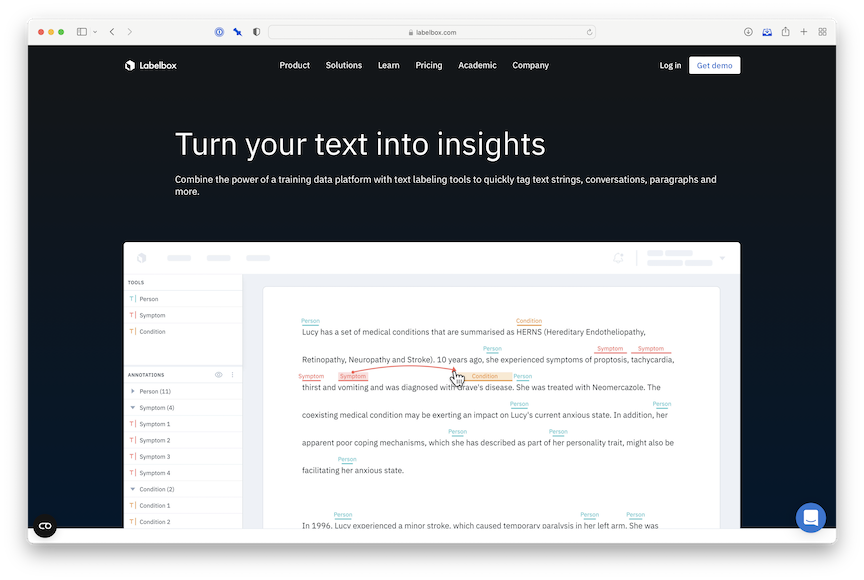 Labelbox is a training data platform for data science teams that need to label and manage data for neural network training. It aims to help teams build high-quality labelled data so they can reduce machine learning development cycles.
Best for: creating labelled datasets for training NLP models, especially when you need annotation workflows and QA.
Cauliflower
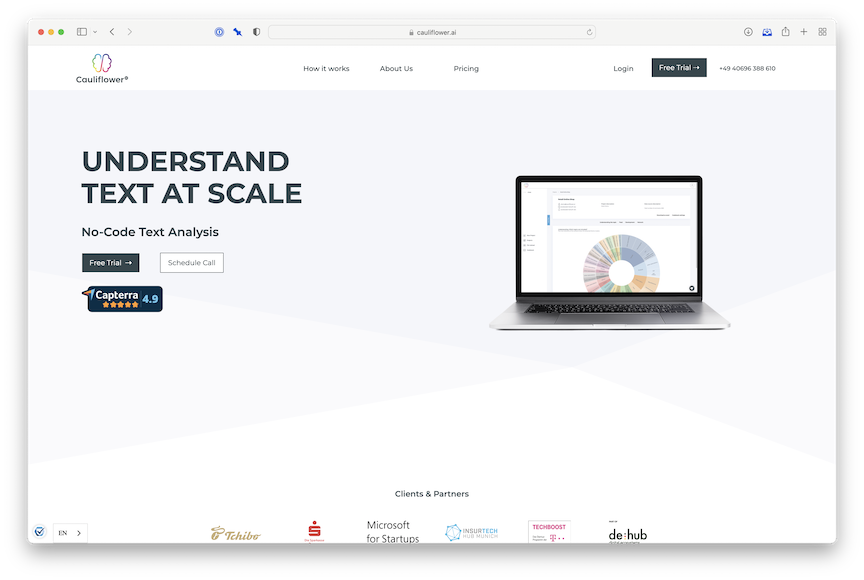 Cauliflower is an AI platform that lets you analyse texts or verbatims and save hours of manual work. Cauliflower is used to classify open-ended questions, chats, comments, and reviews. Features include topic extraction, sentiment analysis, engaging visualisations, and Excel exports.
Best for: quickly classifying large volumes of open-ended responses with consistent topic and sentiment outputs.
Thematic
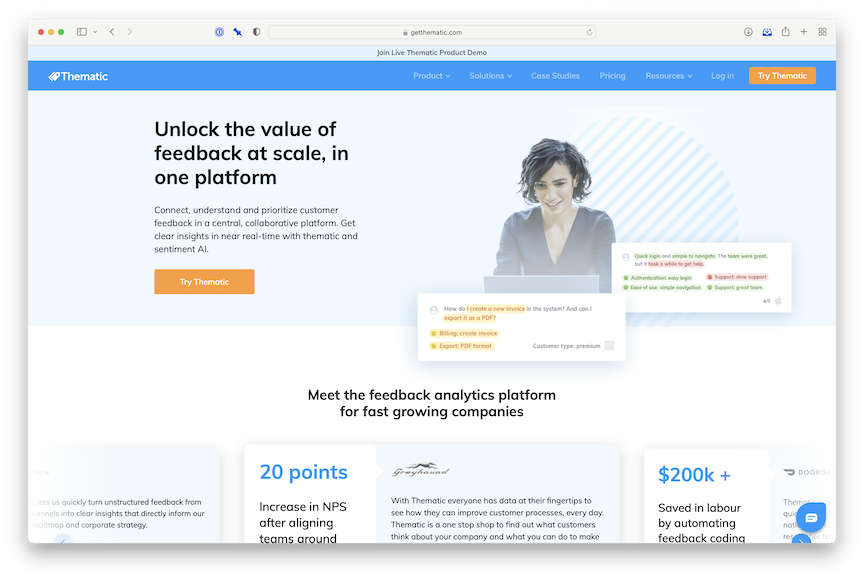 Thematic is a customer feedback analysis solution focused on free-text comments, and it can also be used in education settings.
Best for: turning free-text feedback into themes and drivers, particularly when you want a workflow built around “what are people saying, and why?”
Relative Insight
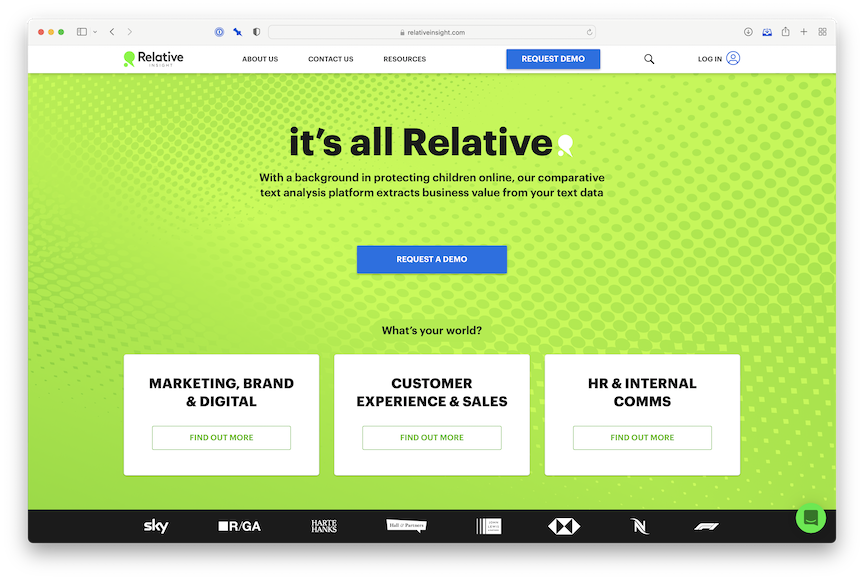 Relative Insight uses technology originally created for crime detection to spot linguistic and attitudinal differences between audiences, and how language shifts over time. It detects statistically significant differences in words, topics, style, and grammar to help brands (and education providers) understand how different groups communicate, and in what context.
Best for: comparing language between groups, and tracking how it changes over time, rather than coding individual comments.
Briefing kit
Download the Student Voice Analytics briefing pack
Share a two-page summary of our comment analytics stack with procurement, governance, and insights teams.
- Covers NSS, PTES, PRES, UKES, module evaluations.
- Explains benchmarks, taxonomy, and reproducibility.
- Includes procurement checklist prompts.
Related Entries
- Lexicon and Software Choice in Education Text Analysis
- Module Evaluation, Likability and The Case For Free-Text Comments
- NSS open-text analysis methodology for UK HE
- Sentiment analysis for UK universities: a practical guide
- Student comment analysis governance checklist for UK HE
- Student feedback analysis glossary for UK HE